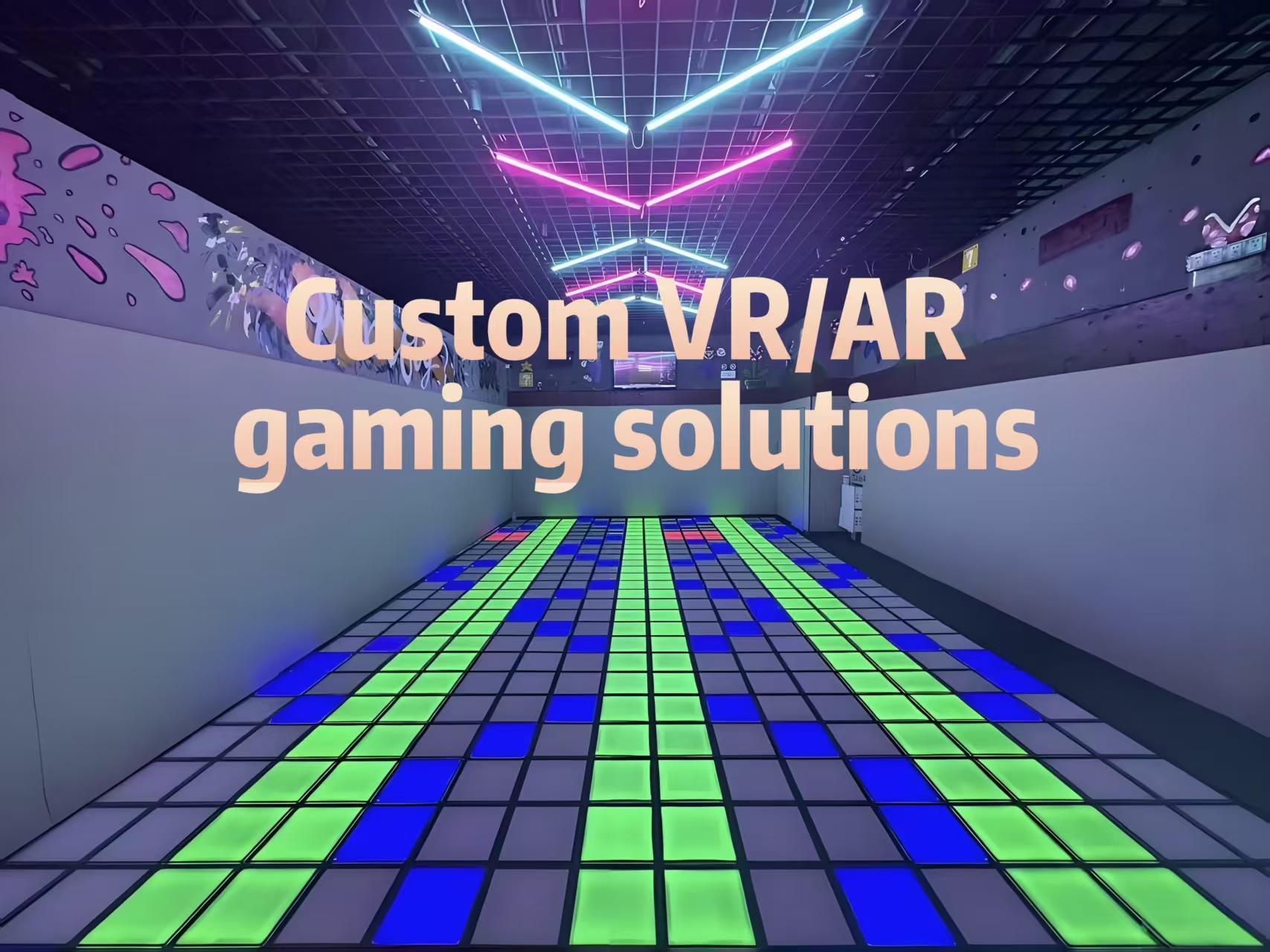
Looking for custom VR/AR gaming solutions that transform ordinary spaces into extraordinary immersive experiences? As virtual and augmented reality technology rapidly evolves, forward-thinking entertainment venues, arcades, and family entertainment centers are leveraging custom VR/AR gaming solutions to attract new demographics, extend dwell time, and command premium pricing. Whether you’re launching a dedicated VR arena, integrating AR elements into existing attractions, or developing branded experiential marketing campaigns, bespoke VR/AR gaming solutions deliver unmatched engagement and strong return on investment.
What Are Custom VR/AR Gaming Solutions?
Custom VR/AR gaming solutions combine virtual reality headsets, augmented reality overlays, motion tracking systems, and interactive physical environments to create immersive entertainment experiences. Unlike off-the-shelf gaming products, custom solutions are tailored to your specific venue requirements, target audience, and business objectives.
| Technology | Experience Type | Ideal Applications |
|---|---|---|
| Virtual Reality (VR) | Fully immersive digital environments | VR arenas, escape rooms, simulation centers |
| Augmented Reality (AR) | Digital overlays on physical spaces | Interactive walls, AR treasure hunts, retail activations |
| Mixed Reality (MR) | Blended physical and digital interaction | Hybrid gaming zones, educational exhibits |
| Location-Based VR (LBVR) | Free-roaming multiplayer experiences | Large-scale entertainment venues, shopping malls |
Key Components of Custom VR/AR Gaming Solutions
Hardware Integration
Professional custom VR/AR gaming solutions require carefully selected hardware:
VR headsets — Wireless standalone units (Meta Quest 3, Pico 4) or PC-tethered systems (HTC Vive Pro 2, Valve Index) depending on graphical requirements
Motion tracking — Lighthouse, inside-out, or optical tracking for precise player movement
Haptic feedback — Vests, gloves, and controllers providing tactile immersion
AR displays — Projection mapping, transparent OLED screens, or smartphone/tablet integration
Physical props — Custom-built set pieces enhancing narrative immersion
Software Development
Bespoke software is the foundation of effective custom VR/AR gaming solutions:
Game engine customization — Unity or Unreal Engine development for unique mechanics
Multiplayer networking — Low-latency synchronization for competitive and cooperative play
Content management systems — Easy updating of experiences without technical expertise
Analytics integration — Player behavior tracking for optimization and monetization
Applications & Market Opportunities
Entertainment Venues
Custom VR/AR gaming solutions transform family entertainment centers, trampoline parks, and arcades into next-generation destinations. Free-roaming zombie survival games, competitive esports arenas, and immersive adventure experiences attract demographics from children to adults, significantly expanding addressable markets.
Corporate & Educational Use
Team-building facilities and training centers leverage custom VR/AR gaming solutions for collaborative problem-solving, safety training, and skills development. These B2B applications command premium pricing and generate recurring revenue through corporate contracts.
Retail & Marketing Activations
Brands deploy pop-up VR/AR experiences in shopping malls and event spaces to create memorable consumer engagements. Custom-branded games and interactive product demonstrations drive social sharing and measurable brand lift.
ROI & Business Benefits
Revenue Optimization
Custom VR/AR gaming solutions enable multiple monetization streams:
Premium session pricing — $15–$45 per experience vs. $8–$15 for traditional attractions
Membership models — Unlimited access subscriptions generating predictable revenue
Private event hosting — Corporate team building, birthday parties, school groups
Content licensing — Reselling custom experiences to other venues
Competitive Differentiation
Venues offering custom VR/AR gaming solutions stand apart from competitors with passive entertainment. The “Instagrammable” nature of immersive experiences drives organic social media marketing, reducing customer acquisition costs.
Implementation Considerations
Space Requirements
Free-roaming VR requires minimum 100 sqm for optimal player movement, while seated VR stations need only 10–15 sqm per unit. AR integrations can overlay existing spaces with minimal physical modification.
Staff Training
Effective operation requires trained game masters facilitating experiences and technical staff maintaining hardware. Budget 20–40 hours initial training per employee.
Content Refresh
Plan for quarterly content updates to maintain repeat visitation. Modular custom VR/AR gaming solutions allow hardware reuse with new software deployments, maximizing long-term asset value.
Conclusion
Custom VR/AR gaming solutions represent the fastest-growing segment of location-based entertainment, delivering immersive experiences that command premium pricing and drive strong customer loyalty. By investing in bespoke hardware and software tailored to your market, venues can capture significant competitive advantage in this rapidly expanding industry.
Ready to develop custom VR/AR gaming solutions for your venue? Contact our team for concept design, technical consultation, and implementation planning.