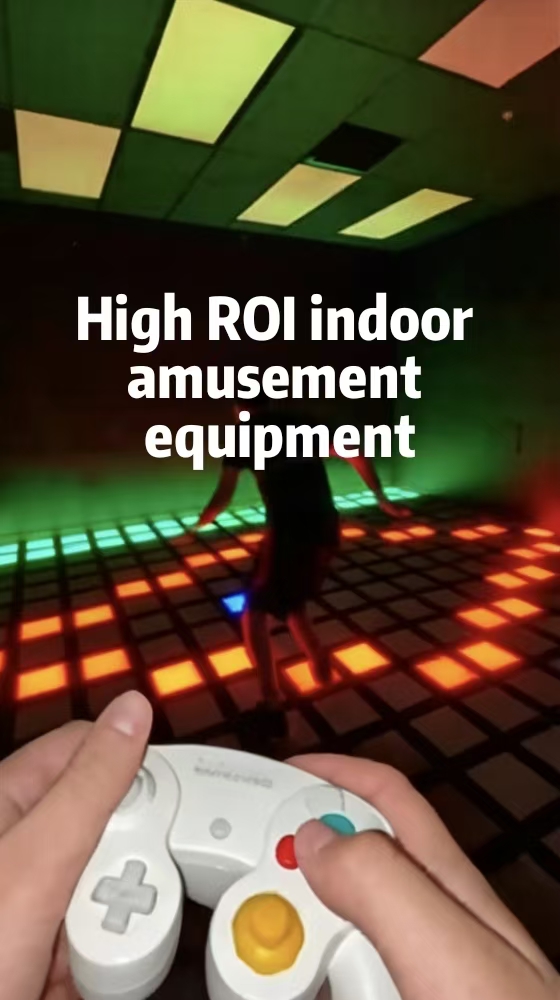
Looking for high ROI indoor amusement equipment that delivers consistent revenue and long-term profitability? As global demand for immersive entertainment experiences continues to surge, savvy operators and investors are prioritizing amusement solutions that combine strong customer engagement with low operating costs and rapid payback periods. Whether you’re launching a new family entertainment center, upgrading an existing trampoline park, or diversifying a shopping mall attraction portfolio, selecting the right high ROI indoor amusement equipment is critical for sustainable business success.
What Defines High ROI Indoor Amusement Equipment?
High ROI indoor amusement equipment generates superior returns through a combination of factors: high throughput capacity, low maintenance requirements, broad demographic appeal, and flexible monetization models. The most profitable installations share common characteristics that distinguish them from traditional passive attractions.
Key Profitability Drivers
| Factor | Impact on ROI | Examples |
|---|---|---|
| Throughput Rate | Higher hourly capacity = more revenue per square meter | Interactive LED floors, multiplayer reaction walls |
| Repeat Visitation | Strong engagement drives customer loyalty | Gamified sports simulators, competitive scoring systems |
| Operating Costs | Lower maintenance = higher net margins | Solid-state LED systems, modular digital platforms |
| Demographic Reach | Broader appeal = larger addressable market | Family-friendly active games, teen/adult competitive zones |
| Space Efficiency | Revenue per square meter optimization | Vertical wall systems, compact multiplayer arenas |
Top-Performing High ROI Indoor Amusement Equipment Categories
Interactive LED Floor Games
Interactive LED floor systems rank among the highest ROI indoor amusement equipment available today. These pressure-sensitive illuminated panels create dynamic gaming experiences where players physically interact with responsive light patterns. With throughput rates exceeding 60 players per hour and minimal staffing requirements, operators consistently report payback periods of 12–18 months.
Active Reaction Walls
Motion-activated reaction walls challenge players to hit illuminated targets, combining physical exercise with competitive gaming. Their vertical orientation maximizes space efficiency, while multiplayer modes drive group bookings and corporate event revenue—significantly boosting per-customer yield.
Sports Simulation Systems
Digital sports simulators for soccer, basketball, tennis, and golf attract diverse demographics from children to corporate teams. These systems command premium pricing for individual sessions while supporting tournament programming and league structures that generate recurring revenue.
Immersive Projection Experiences
Projection mapping attractions transform ordinary walls and floors into interactive digital environments. Lower hardware costs compared to LED alternatives make these systems accessible for smaller venues, while content refresh capabilities ensure long-term customer interest without major capital reinvestment.
Calculating ROI for Indoor Amusement Equipment
Revenue Modeling
Successful operators project revenue using conservative assumptions:
Average ticket price: $12–$25 per session
Daily operating hours: 10–12 hours
Utilization rate: 40–60% during peak, 15–25% off-peak
Additional spend: Food, beverage, merchandise, photo/video sales
Cost Considerations
Comprehensive ROI analysis must account for:
Initial equipment investment including installation and commissioning
Space preparation including flooring, electrical, and HVAC modifications
Staffing requirements for supervision and customer service
Maintenance reserves typically 5–8% of gross revenue annually
Content licensing or software subscriptions for digital platforms
Strategic Implementation for Maximum Returns
Location Optimization
High ROI indoor amusement equipment performs best in high-foot-traffic environments: shopping malls, tourist districts, mixed-use developments, and entertainment complexes. Proximity to complementary attractions creates destination appeal that extends customer dwell time and spending.
Hybrid Revenue Models
The most profitable operators combine multiple monetization strategies:
Walk-in admissions with dynamic peak/off-peak pricing
Membership programs generating predictable recurring revenue
Private event hosting including birthdays, corporate team building, school groups
Tournament and league programming creating community engagement and repeat visitation
Digital content sales including photo capture, video highlights, achievement tracking
Why Partner With an Established Equipment Supplier?
Working with experienced high ROI indoor amusement equipment manufacturers provides critical advantages:
Proven game mechanics refined through thousands of installations
Commercial-grade durability engineered for 12+ hour daily operation
Technical support infrastructure minimizing downtime and revenue loss
Content update pathways keeping attractions fresh without full replacement
Financing and leasing options preserving working capital for marketing and operations
Conclusion
Investing in high ROI indoor amusement equipment requires strategic selection of proven technologies, careful location planning, and disciplined operational execution. By prioritizing attractions with strong throughput, broad demographic appeal, and low maintenance requirements, operators can achieve payback periods under 24 months while building sustainable competitive advantages in rapidly growing markets.