The global indoor amusement center market was valued at USD 54.73 billion in 2025 and is projected to reach USD 121.54 billion by 2033, growing at a CAGR of 10.9%. As demand for immersive, climate-controlled entertainment surges, choosing the right custom indoor gaming facility manufacturer has become the single most important decision for investors, FEC operators, and commercial developers.
Why Customization Matters in 2026
Today’s consumers—especially millennials and Gen Z parents—prioritize experiences over material goods. Generic, off-the-shelf equipment no longer captures attention or drives repeat visits. A professional custom indoor gaming facility manufacturer delivers tailored solutions that align with your brand identity, spatial constraints, and target demographic. Whether you need a high-energy trampoline park, an interactive projection arena, or a hybrid family entertainment center (FEC), custom design ensures every square foot maximizes revenue and engagement.
Key Trends Shaping the Industry
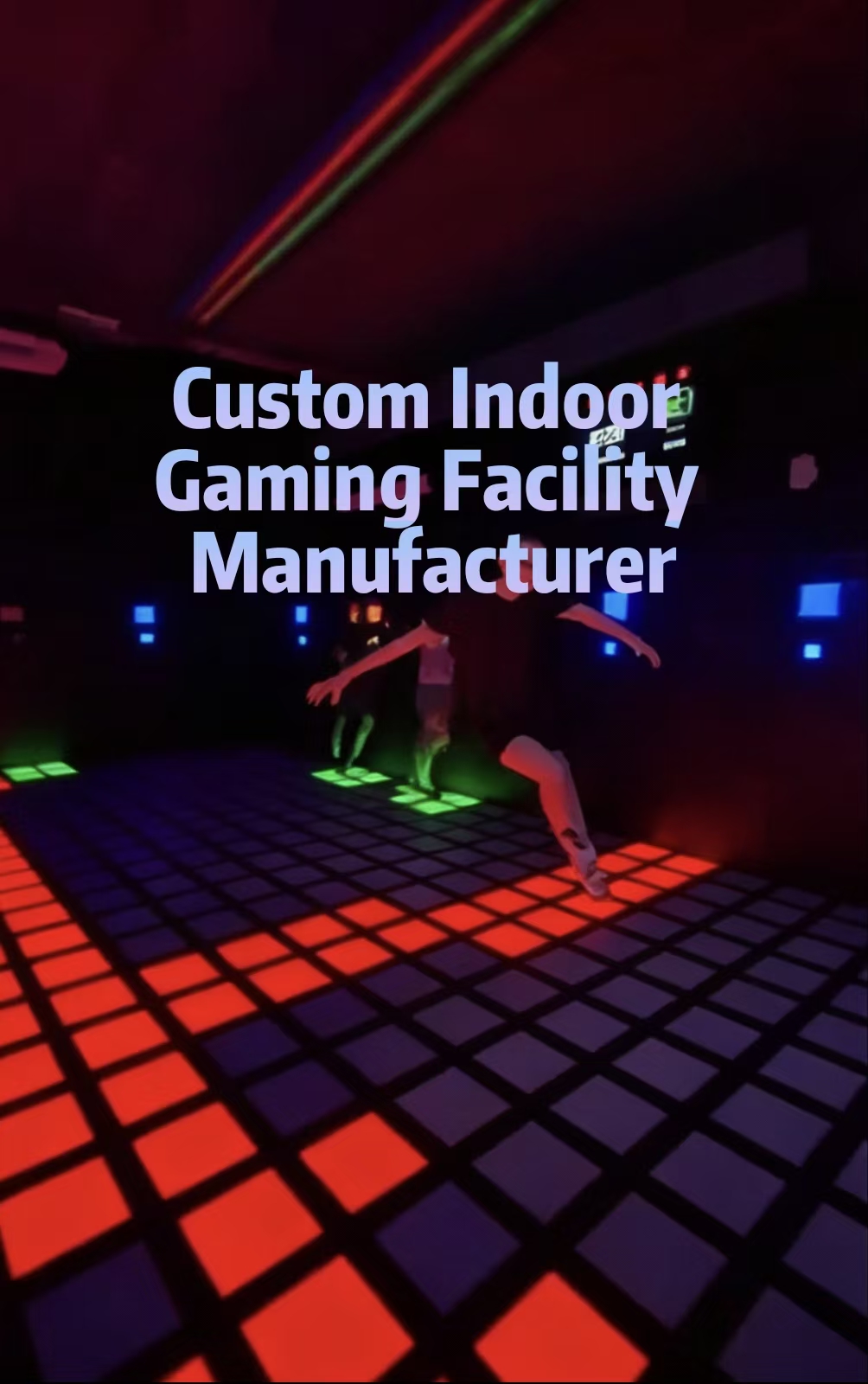
Leading manufacturers in 2026 are integrating interactive projection mapping, gamified soft play, and AR/VR technologies into traditional structures. Projection mapping alone is expected to dominate 51.33% of the location-based entertainment market, offering zero physical wear and infinite content updates. Additionally, gamified attractions using RFID wristbands and real-time scoring systems extend average playtime from one hour to two or three hours, directly boosting food and beverage revenue.
What to Look for in a Custom Indoor Gaming Facility Manufacturer
When evaluating potential partners, focus on these four pillars:
1.Turnkey Project Capability — The best manufacturers handle everything from 3D concept design and safety engineering to installation and after-sales support. This eliminates the complexity of managing multiple contractors.
2.Safety Certifications — Ensure compliance with international standards such as ASTM F1918, EN1176, CE, and ISO9001. These certifications protect your investment and ensure guest safety.
3.Material Quality & Durability — Commercial-grade facilities require galvanized steel frames, heavy-duty PVC vinyl, fire-retardant netting, and impact-absorbing surfaces. High-quality materials reduce long-term maintenance costs and extend equipment lifespan.
4.Technology Integration — Modern facilities demand hardware that supports dynamic content updates, mobile booking integrations, and AI-driven analytics. A forward-thinking manufacturer builds systems ready for tomorrow’s innovations.
The Competitive Advantage of Hybrid FECs
Hybrid venues combining arcade games, active attractions, VR zones, and party spaces now dominate the market. They attract multi-generational audiences and generate consistent footfall. However, operational complexity is a hidden challenge. Partnering with a custom indoor gaming facility manufacturer that specializes in low-maintenance, high-throughput attractions helps balance labor costs while maximizing uptime.
North America Leads, Asia Pacific Accelerates
North America held the largest revenue share (39.3%) in 2025, driven by mature experience-led consumer spending. Meanwhile, rapid urbanization in Asia Pacific and Europe is fueling demand for compact, high-efficiency indoor gaming solutions. A manufacturer with global project experience and regional compliance expertise is essential for seamless market entry.
Conclusion
Investing in a custom indoor gaming facility is not just about buying equipment—it’s about creating a destination. The right custom indoor gaming facility manufacturer acts as your strategic partner, transforming empty commercial space into a high-ROI entertainment hub. In a market growing at 10.9% annually, the difference between a generic venue and a custom-designed experience is the difference between surviving and thriving.